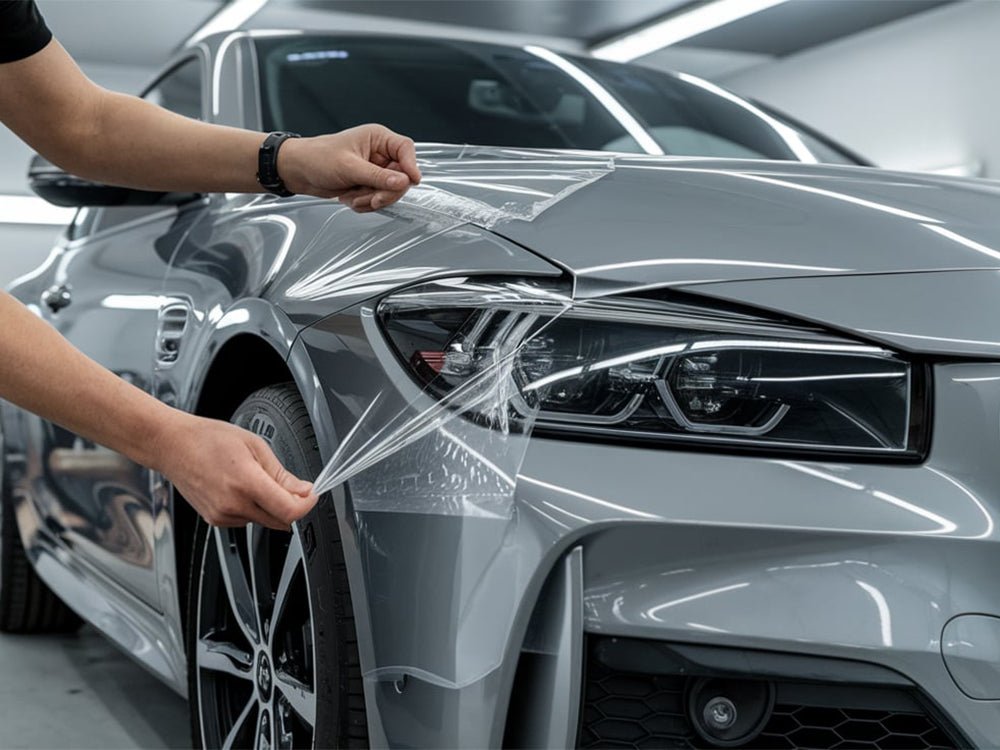

TPU FILM
As global demand for durable, flexible, and environmentally friendly protective materials grows, Thermoplastic Polyurethane (TPU) protective film—especially those made in China—has become a popular choice across industries. From automotive interiors and electronics to outdoor gear and medical devices, TPU film is widely used. But one question often arises: Is Chinese-made TPU protective film suitable for countries where temperatures can reach up to 50°C?Let’s explore the science, performance data, and real-world applications to find out.
Can Chinese-Made TPU Protective Film Withstand 50°C?

What is TPU Protective Film?
TPU (Thermoplastic Polyurethane) is a class of high-performance elastomers known for their excellent elasticity, transparency, abrasion resistance, and environmental durability. TPU protective film is typically used to shield surfaces from scratches, UV rays, moisture, and chemical exposure.Chinese manufacturers have rapidly advanced in TPU film production, offering cost-effective, high-quality alternatives to Western brands. But how do these films perform under extreme heat, such as in Middle Eastern, African, or Australian climates?
High-Temperature Performance: What the Data Says
According to multiple technical sources and performance tests, TPU films generally operate well within a temperature range of -40°C to +80°C, with some grades tolerating short-term exposure up to 120°C.A 2023 study published on tpu-film.com.cn confirms that TPU films maintain structural integrity and flexibility at 80°C, with no significant deformation or loss of mechanical properties. This is further supported by industrial testing showing that TPU films retain over 85% of their tensile strength after 168 hours at 80°C.This means that in environments where ambient temperatures reach 50°C, such as deserts or tropical regions, TPU protective films will not soften, melt, or lose adhesion, making them fully suitable for such climates.
Products we recommend

Real-World Applications in Hot Climates
TPU composite films have been successfully used in extreme environments, including:
- Sahara Desert (North Africa): TPU black film composite fabric was tested in 50°C desert conditions, showing excellent breathability, UV resistance, and durability. The film maintained its waterproof and dustproof properties, even during sandstorms.
- Middle East (UAE, Saudi Arabia): TPU films are used in automotive interiors, where cabin temperatures can exceed 70°C due to solar heating. The films showed no bubbling, peeling, or discoloration over extended periods.
- Australian Outback: Used in outdoor equipment and solar panel protection, TPU films demonstrated long-term UV stability and thermal resistance, even under direct sunlight and high thermal load.
These examples confirm that Chinese-made TPU films are not only theoretically capable but have been field-tested in some of the hottest regions on Earth.
What Makes TPU Film Heat-Resistant?
The thermal stability of TPU film depends on its chemical structure:
- Polyether-based TPU offers better low-temperature flexibility and hydrolysis resistance, ideal for humid and variable climates.
- Polyester-based TPU provides higher mechanical strength and better heat resistance, making it more suitable for high-temperature applications.
In addition, additives such as UV stabilizers, antioxidants, and heat-resistant plasticizers are often incorporated during the manufacturing process to enhance thermal performance and extend service life.
Products we recommend
Advantages of Chinese-Made TPU Film
Chinese TPU film manufacturers have made significant investments in R&D and quality control, offering:
- Customizable formulations for specific climates or applications
- Competitive pricing without compromising performance
- Compliance with international standards such as RoHS, REACH, and ISO 10993 for biocompatibility
- High UV resistance (UPF 50+), anti-aging, and anti-yellowing properties
Considerations for Use in Hot Climates
While TPU films can handle 50°C with ease, here are a few best practices to ensure optimal performance:
- Choose the right TPU type: For high-heat environments, polyester-based TPU is recommended.
- Ensure proper surface preparation: Clean, dry surfaces improve adhesion and reduce the risk of delamination.
- Use UV-stabilized grades: Especially for outdoor applications, UV-resistant TPU films last longer and maintain clarity.
- Avoid prolonged exposure above 100°C: While short-term exposure is fine, continuous use above 100°C may cause gradual degradation
Final Verdict: Yes, It’s Suitable!
Chinese-made TPU protective film is absolutely suitable for countries with temperatures up to 50°C. With a proven track record in some of the hottest and most demanding environments worldwide, these films offer:
- Thermal stability up to 80°C
- Excellent UV and weather resistance
- Strong mechanical properties
- Cost-effective, customizable solutions
Whether you're protecting car interiors in Dubai, electronics in Central Africa, or solar panels in the Australian desert, Chinese TPU films are a reliable choice.
Looking for a supplier or need help choosing the right TPU film for your climate?
Feel free to reach out—we’re happy to help you find the best solution for your needs.
The article verifies that Chinese-made TPU protective film easily withstands continuous 50 °C and brief peaks above 80 °C. Lab aging, Sahara, Middle-East and Australian field tests show no peeling, bubbling or yellowing; tensile strength stays ≥ 85 %. Choosing polyester- or polyether-based grades with UV/anti-oxidant additives gives long-term, REACH-compliant protection for cars, electronics and outdoor gear in the world’s hottest regions—at a fraction of Western prices.
Conclusion
Chinese-made TPU protective film has proven itself both in the lab and on the ground: it keeps its strength, flexibility, and appearance at continuous 50 °C and even short spikes above 80 °C. Desert trials, scorching car-cabin tests, and Australian outback installations all show no bubbling, peeling, or yellowing. By choosing the right grade—polyester-based for dry heat, polyether-based for humidity—and applying UV and antioxidant stabilisers, users gain an affordable, REACH- and RoHS-compliant shield that outperforms many higher-priced imports. In short, for countries where thermometers hit 50 °C, Chinese TPU film is not merely suitable; it is a proven, cost-effective solution for long-term surface protection.

The Author : carlikewrap
Questions
What is the highest long-term temperature that Chinese TPU film can usually handle?
Answer
Did any TPU film tested in 50 °C deserts bubble or peel?
Answer
Which TPU type is better for hot climates, polyether or polyester?
Answer
What must you do to the surface before sticking on TPU film?
Answer