
Table of content
The Market Paradigm Shift from "Decoration" to "Protection"
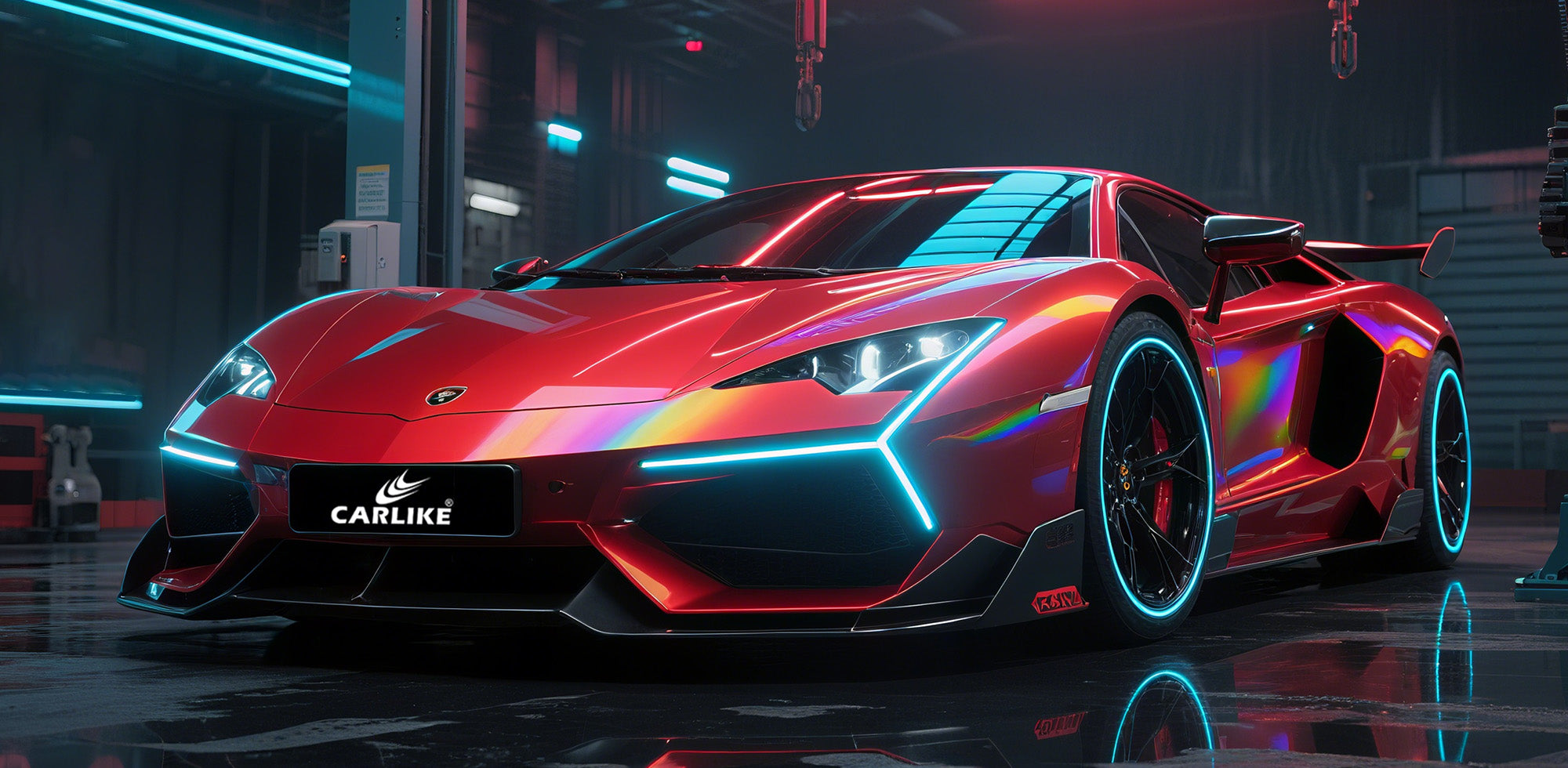
2017 was dubbed by the industry as the breakout year for car color-change films and paint protection films (PPF). Just a few years later, the market landscape is undergoing a disruptive transformation. Based on industry observations and data analysis, 2026 will become a critical turning point for colored TPU color-change films to move into the mainstream. By then, the body film market will see traditional color-change films, invisible PPF, and TPU color-change films forming a "tripartite stand" pattern. By 2033, the market size of TPU color-change films is expected to surpass the combined total of traditional color-change films and PPF.This shift is not coincidental, but rather an inevitable result of consumption upgrading in the automotive aftermarket.

Farewell to the PVC Era, The Full Rise of Colored TPU
For a long time, PVC color-change films dominated the market thanks to their rich color options and affordable prices. International brands such as 3M and Avery Dennison became consumers' preferred choices with their mature R&D systems. However, PVC materials have inherent, insurmountable shortcomings: they fade easily, have short service lives, and offer weak scratch resistance. These deficiencies have become increasingly apparent in the face of consumers' ever-rising quality demands.In comparison, TPU (Thermoplastic Polyurethane) color-change films demonstrate comprehensive performance advantages:Exceptional Weather Resistance: They remain soft and free from fading under high temperatures, and won't become brittle or crack in low-temperature environments. Their UV and yellowing resistance far exceed those of PVC, with a service life reaching 5-7 years.Self-Healing Functionality: The special surface coating possesses elastic memory characteristics, allowing minor scratches to automatically repair upon heating—a core competitive advantage that the industry calls "colored PPF."Premium Texture: Through precision processes such as casting and multi-layer coating, TPU color-change films deliver vibrant, full-bodied colors with lasting gloss. The color layers are more delicate and realistic, approaching the texture of factory paint.
The Convergence Point of Three Industry Upgrades
The rise of TPU color-change films is actually the inevitable convergence of three industry upgrade directions:First, color-change films themselves are undergoing technological iteration from paper-based to PET-based systems. Second, invisible PPF is expanding from transparent to matte, glossy black, and other SKU variations. Most importantly, automotive factory paint technology is undergoing revolutionary changes—the Tesla Cybertruck has already eliminated traditional painting processes. If vehicles in the future generally reduce paint usage or only retain basic black and white colors, owners' demands for factory paint protection will decrease, while demands for colored protection will rise sharply.TPU color-change films will not only replace PVC color-change films but also penetrate the factory paint market to a certain extent.
Products we recommend

Market Drivers for 2026
The Personalization Awakening of Young Consumers
Gen Z car owners have a strong desire for diverse vehicle appearances. They no longer settle for single-function protection or color-changing; they want "the best of both worlds"—both cool personalized colors and vehicle value preservation. TPU color-change films perfectly meet this dual demand.
The Explosion of the New Energy Vehicle Market
Between 2025-2026, the penetration rate of new energy passenger vehicles in China will increase significantly. New energy vehicle owners have strong demands for personalized decoration after taking delivery, and these vehicles often feature more expensive factory paint processes, making protection even more urgent.
Technological Maturity and Cost Optimization
As production processes mature and economies of scale take effect, the price gap between TPU and PVC color-change films is gradually narrowing. Taking CARLAS as an example, its TPU color-change film series has launched nearly 300 popular color options, providing vehicle owners with abundant high-quality choices.
Entry of Capital Giants
The involvement of global coating giants such as PPG marks the industry's entry into a new stage of standardized, high-quality development. These companies' R&D investments and technical accumulation will accelerate market education and technological iteration for TPU color-change films.
Future Outlook
In 2026, colored TPU color-change films becoming mainstream is an unstoppable trend. It represents not only a material upgrade but also symbolizes the automotive aftermarket's transformation from "price-oriented" to "value-oriented."For vehicle owners, this means no longer having to struggle between "color-changing or protection"—one application delivers dual value. For industry practitioners, this is an opportunity period to move from growth to quality competition. For the entire automotive aftermarket, the popularization of TPU color-change films will push industry standards upward, creating a better vehicle ownership experience for consumers.From PVC to TPU, from simple color-changing to "colored PPF," 2026 will become a watershed moment for the automotive film industry. In this material revolution, only companies that truly understand consumer demands and insist on quality and innovation will secure a place in the new landscape.
Products we recommend

Conclusion
The year 2026 marks a definitive turning point for the automotive film industry as colored TPU color-change films transition from niche innovation to mainstream adoption. This evolution represents far more than a simple material upgrade from PVC—it embodies a fundamental market transformation where consumer demands for personalization and protection converge into a single, premium solution.Driven by technological maturity, cost optimization, generational shifts in consumer preferences, and the explosive growth of new energy vehicles, TPU color-change films are uniquely positioned to capture the "best of both worlds" market opportunity. The entry of global industry leaders and projected market dominance by 2033 further validate this trajectory.For stakeholders across the automotive aftermarket ecosystem, success in this new landscape will require abandoning price-driven competition in favor of value-oriented innovation. As the industry moves beyond the false dichotomy of "color versus protection," businesses that embrace this paradigm shift and invest in quality, technology, and consumer education will thrive in the TPU-dominated era ahead.The road to 2026 is clear: colored TPU color-change films are not merely an alternative—they are the future of automotive personalization and preservation.


The Author : CARLIKE
Questions
Why will 2026 be a turning point for TPU color-change films?
Answer
What are TPU's main advantages over PVC?
Answer
Which three industry trends are driving TPU adoption?
Answer
How do Gen Z and EV growth impact TPU demand?
Answer