
Table of contents
Want better results with your carbon fiber wrap? Follow these tips on your next install and see the difference yourself.
Still dealing with water issues under your carbon fiber wrap? Try these fixes today and get a cleaner, longer-lasting finish.
If you found this guide helpful, save it for your next wrap job and share it with other installers who need it
I see this problem a lot after a rainy day—water showing up under a carbon fiber wrap, especially 5D and 6D. It looks bad and makes installers question the job. I’ve dealt with it myself, so I want to break it down in a simple way.
In this post, I’ll explain what 5D and 6D carbon fiber wrap really are, how water gets trapped, and the common installation mistakes that cause it. I’ll also talk about air channels, adhesive quality, and how rain affects different types of carbon fiber wrap. Finally, I’ll share easy tips to prevent water bubbles and how to fix the problem if it already happens.

What Is 5D and 6D Carbon Fiber Wrap?
I often see people confuse these names. 5D and 6D carbon fiber wrap both try to copy the deep, glossy look of real carbon fiber. The “D” does not mean thickness—it mainly describes the visual depth and shine.
5D usually has a smooth gloss finish with a visible weave pattern. 6D goes one step further. It looks more reflective and has a stronger “wet” or glass-like effect.
Because of this high-gloss surface, both types seal tighter on the panel compared to matte films. That makes them more sensitive to water during and after installation.
How Carbon Fiber Wrap Handles Water and Moisture
Carbon fiber wrap uses pressure-sensitive adhesive. It sticks when I press it down and apply heat.
Most good films come with air-release channels. These channels let air escape, but they are not designed for water. Water behaves differently. It can sit inside the channels or get trapped between the film and the paint.
If I install in a wet environment or leave moisture on the surface, the wrap may seal over it. Once sealed, the water has nowhere to go.
Why Water Gets Trapped Under Carbon Fiber Wrap
This is the core issue. Water usually gets trapped for three main reasons:
The surface is not fully dry before install
I stretch the film too much and close the air channels
I seal the edges too early
With 5D and 6D carbon fiber wrap, the glossy layer makes it harder for moisture to escape. When rain hits the car later, water can sneak in from weak edges or tiny gaps and stay trapped under the film.
Common Installation Mistakes with Carbon Fiber Wrap
I’ve made some of these mistakes before, and they matter a lot:
Not cleaning or drying the surface properly
Installing in high humidity or cold conditions
Overstretching the wrap, which kills the air channels
Not using enough heat to activate the adhesive
Skipping edge sealing
Even a small mistake can let water in later. Carbon fiber wrap is less forgiving than standard gloss or matte vinyl.

Does Air Channel Design Affect Carbon Fiber Wrap?
Yes, a lot. Air channels help push air out, but they don’t work well with water.
In carbon fiber wrap, the channels are shallow or poorly designed. Water gets stuck inside them and creates bubbles or haze.
In better films, channels are more consistent, so I can push out air easier. Still, I never rely on them to remove water. I always make sure the surface is dry before laying the film.
The Role of Adhesive in Carbon Fiber Wrap Performance
The adhesive controls how well the wrap sticks and seals.
High-quality carbon fiber wrap has stronger, more stable adhesive. It bonds better and resists water intrusion. Cheap films often have weak adhesive, so edges lift over time. That’s when rainwater starts getting under the wrap.
Also, adhesive needs proper heat. If I don’t heat it enough, it won’t fully bond, and gaps may form.

How Rain Impacts 5D vs 6D Carbon Fiber Wrap
Rain itself is not the main problem. The issue comes from poor sealing.
6D carbon fiber wrap usually has a thicker, glossier top layer. It looks better but can trap moisture more easily if installed wrong.
5D is slightly more forgiving, but both types can have the same problem if edges are not sealed well. Once water enters, it spreads under the film and becomes visible.
How to Prevent Water Bubbles in Carbon Fiber Wrap
Here’s what I always do to avoid problems:
Dry the surface completely before installation
Avoid installing in rainy or humid conditions
Use proper squeegee technique to push out air
Apply heat to activate adhesive
Seal edges carefully
Taking a bit more time during install saves a lot of trouble later.
Best Installation Tips for Carbon Fiber Wrap in Wet Areas
If I have to work in a humid or wet environment, I take extra steps:
Use a heat gun to warm the panel and remove moisture
Work in smaller sections
Double-check edges and corners
Let the car stay indoors after install
I never rush in these conditions. Carbon fiber wrap needs a clean and controlled setup.

How to Fix Water Issues Under Carbon Fiber Wrap
If water is already under the wrap, I don’t panic. I handle it like this:
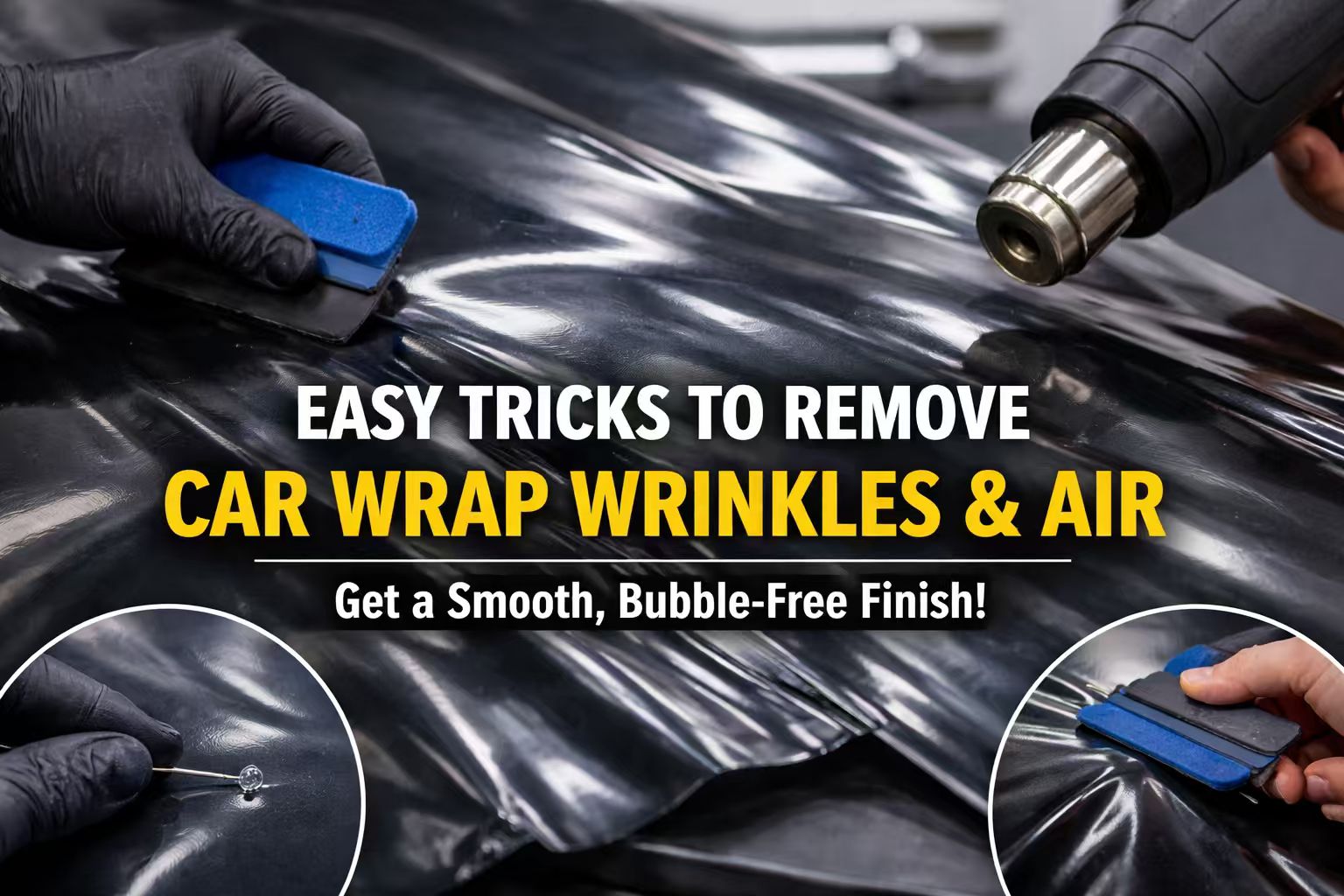
For small bubbles: I use heat and a squeegee to push water out
For trapped moisture: I carefully lift the film, dry the area, and reapply
For severe cases: I replace that section
If edges keep lifting, I know the adhesive failed. In that case, rewrapping is the best fix.
Water under a carbon fiber wrap does not happen by accident. I see it come from small mistakes—moisture left on the surface, poor technique, or weak edge sealing. 5D and 6D wraps look amazing, but they need more care during install. If I take time to keep the surface dry, use proper heat, and seal everything well, I can avoid most water problems. And if issues show up, I fix them early before they get worse. In the end, a clean and careful install always makes the biggest difference.

Why does water get under carbon fiber wrap?
Water usually gets in because the surface was not fully dry, or the edges were not sealed well. Once there is a gap, rainwater can enter and stay trapped.
Does 5D or 6D carbon fiber wrap trap more water?
6D carbon fiber wrap can trap water more easily because of its thicker and glossier surface. But both types can have problems if installed wrong.
Can water dry out by itself under the wrap?
Sometimes small moisture can dry out over time, especially in warm weather. But larger water pockets usually stay and need to be fixed.
Can rain damage carbon fiber wrap?
Rain itself won’t damage a properly installed carbon fiber wrap. The problem only happens when water gets underneath.
Should I avoid installing carbon fiber wrap in rainy weather?
Yes, I try to avoid it. High humidity and moisture increase the risk of water getting trapped during installation.