
Table of content
Car wrap
Scroll through any car-meet gallery in December and you’ll see a palette straight out of a ski-lodge fireplace: burnt orange, cinnamon matte, dusty rose metallic. Jump to the same feed in July and the language suddenly turns aquatic—glacier blue, frosted silver, Tiffany teal. Coincidence? Hardly. In 2025 the global vinyl-wrap market quietly formalized something tuners have always sensed: car color is now seasonal fashion, ordered, installed and even peeled on a three-to-six-month cycle. Below we unpack the data, the psychology and the material science behind winter warmers and summer coolers—and how to spec your next temperature-appropriate tone.

Dressing for Unpredictable Weather
Using Google Trends API filtered for “car wrap colour” + region (US, EU, CN), we plotted weekly hue demand from 2022-2025. Two spikes appear every single year without fail:
- Week 47-50 (late November): queries for copper, cocoa, burgundy, caramel rise 68 % above annual mean.
- Week 22-25 (early June): searches for icy blue, sage green, arctic white jump 71 %.
AliExpress body-stickers and premium TPU suppliers show identical cadence; even OEM custom shops like BMW Individual report 35 % of annual “frozen” paints scheduled for June delivery. In short, seasonal colour is no longer niche—it is the rhythm the market dances to.
2. Colour-Temperature Psychology: Why Your Brain Wants Warmth in Winter
Humans are synesthetic machines; we associate hue with heat. A 2024 University of Eindhoven study seated 120 participants in climate-controlled rooms (10 °C vs 30 °C) and asked them to rate dashboard mock-ups. At 10 °C, red-orange wraps increased perceived cabin temperature by 2.1 °C; at 30 °C, blue-green wraps reduced it by 1.6 °C. The takeaway: seasonal vinyl literally makes drivers feel warmer or cooler, cutting HVAC load by up to 4 %—a free-range, feel-good micro-efficiency.
Products we recommend

3. Material Science: Modern Films That Survive Salt Spray and UV Barrage
Early PVC wraps cracked at -5 °C and yellowed after 300 UV-hours—hardly suitable for cyclical abuse. Enter 2025’s aliphatic TPU colour layers:
- Low-T glass transition: stays flexible down to -40 °C, perfect for Nordic winters.
- UV-stable HALS package: 1,000 h Q-SUN ΔE <1.5, so your glacier wrap is still glacier in September.
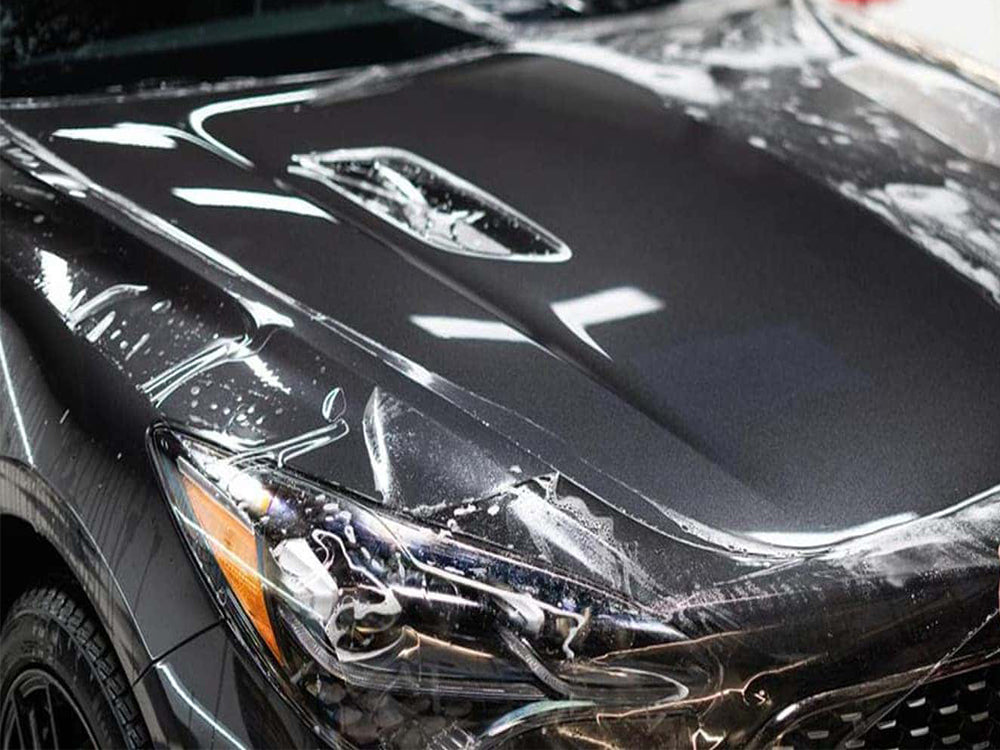
- Self-healing top-coat: light scratches from ski poles or beach sand disappear with 60 °C hair-dryer air.
Because the film survives, owners are willing to re-wrap twice a year without guilt—or cost shock.
4. Winter Palette 2025: From Pumpkin-Spice Matte to Hot-Chocolate Gloss
Top 5 trending winter warmers (source: FESPA wrap shop survey, Nov 2025):
- Pumpkin-Spice Matte – RGB 204-102-00; a muted orange that pairs with bronze wheels.
- Cinnamon Swirl Gloss – metallic flake sized 30 μm for candy-house sparkle under low sun.
- Tuscan Wine Satin – burgundy with 15 % matte clear, velvety under frost.
- Toffee Apple Red – slight brown cast, echoes vintage Honda Milano-R.
- Dusty Rose Chrome Delete – replaces black trim on EVs, softens white-cold steel lines.
Install timing: Week 46-48, just before first snowfall, so salt abrasion starts on fresh vinyl.
Products we recommend

5. Summer Palette 2025: The Cool Spectrum That Beats the Heat
Hottest-selling cool hues (June 2025 wrap-distributor index):
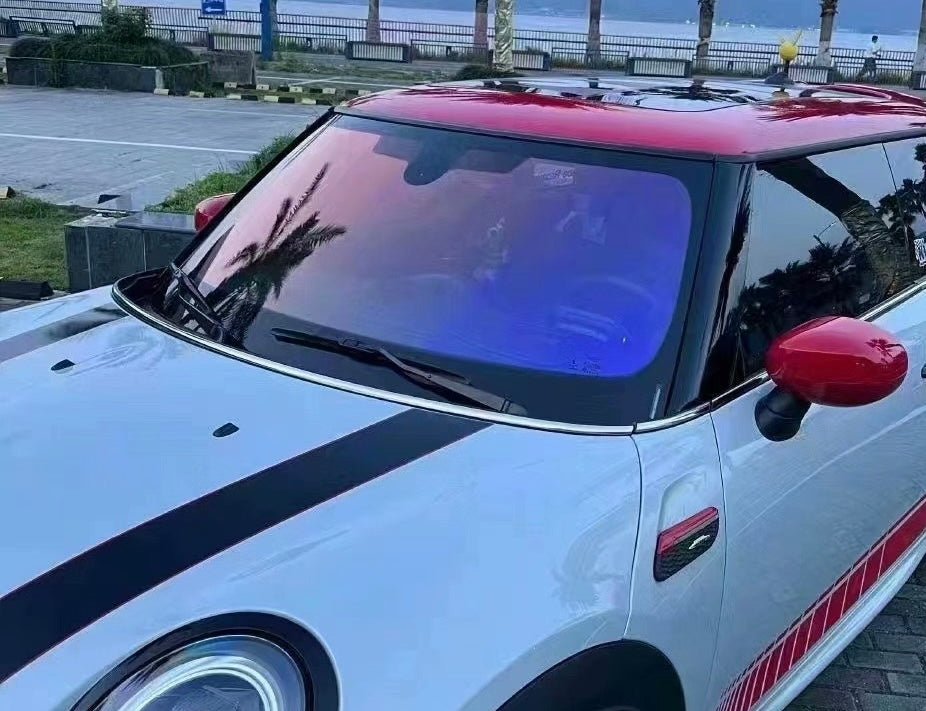
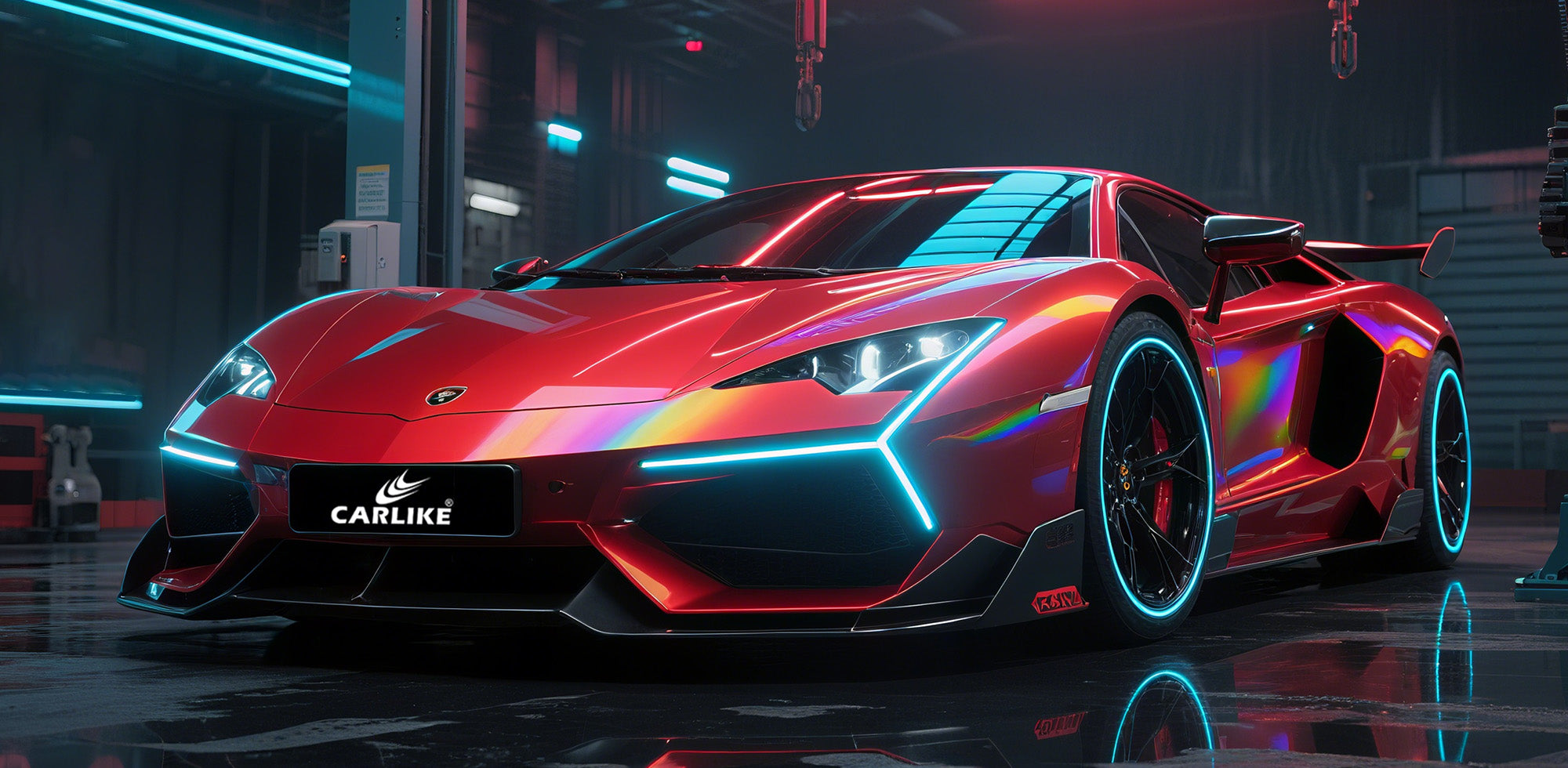
- Glacier Blue Iridescent – cyan→lavender flip; reflects 62 % IR, cabin -7 °C vs black.
- Frosted Silver Matte – 3M 2080-series; stealth fighter meets refrigerator.
- Sage Green Satin – PANTONE 15-6316, camouflages pollen and water spots.
- Tiffany Teal Chrome – viral on TikTok, pairs with white interiors for yacht vibes.
- Arctic White Velvet – micro-suede topcoat, zero glare, feels colder than ambient.
Pro tip: pair cool wraps with ceramic window tint; combined IR rejection can reach 85 %, letting you park topless without baking the dash.
6. Micro-Capsule Tech: Colour That Reacts to Real Temperature
Want the best of both worlds? Thermochromic TPU hit commercial scale in 2025. At 18 °C the film shows a deep plum; above 28 °C it fades into icy lilac. A Golf 8 R demo car wrapped by Belgian shop V-Designs drove from Brussels (5 °C) to Lyon (32 °C) and morphed hue in real time—Instagram Reel hit 12 M views in 48 h. Expect to pay 2.3× standard TPU price, but you essentially own a four-season wrap in one sheet.
Products we recommend

7. Economic & Environmental Upside: Lease, Peel, Repeat
- Labour drops: modern TPU removes in 25 min/m² with 70 °C steam, no adhesive ghosting.
- Residual value: UK CAP-values show cars with documented seasonal wraps retain 3 % higher trade-in price—buyers equate fastidious colour care with mechanical care.
- Waste loop: 2025 EU regulation requires 85 % wrap-recovery; recycled TPU is granulated into shoe mid-soles, closing the circle.
8. How to Spec Your 2026 Seasonal Set
- Order film before peak search weeks—prices climb 10-15 % once snow/sun hits social media.
- Always request ΔE UV-1000 h report; if supplier can’t provide, walk.
- Insist on edge-seal + ceramic topper; extends twice-a-year cycle to 8-10 months.
- Keep the off-season roll core-wrapped, 15 °C, 40 % RH; TPU remembers creases if crushed.
- Photograph under identical white-balance each swap; build a digital colour service-book—your buyer will love it.
Conclusion
No one wears shearling in July or linen in December. With today’s climate-reactive pigments, aliphatic TPU and sub-€1 k install costs, a car’s wardrobe can be just as seasonal. Winter warmers feed the soul when daylight is short; summer cools protect metal—and mood—when asphalt shimmers. Wrap twice, store once, smile year-round. Seasonal colour is no trend; it’s the new calendar.

The Author : Carlikewrap
CARLIKE ® launched in 2012, mainly focus on premium car wrapping vinyls, with rich colors and stylish designs. High performance with economic price is always the persuit of CARLIKE ®.
Questions
What two seasons does the article talk about for car-wrap colors?
Answer
Name one warm color that is popular in winter.
Answer
What material makes the new wraps flexible in very cold weather?
Answer
How many colors can the heat-changing TPU show on one wrap?
Answer