
Table of contents
Paint protection is very important in daily vehicle care. It not only affects the car’s appearance but also impacts its lifespan and resale value.Ceramic coating and PPF are two common ways to protect car paint. But which one is better? This guide will compare their differences, pros and cons, and help choose the best option based on different need.
What is PPF for Car
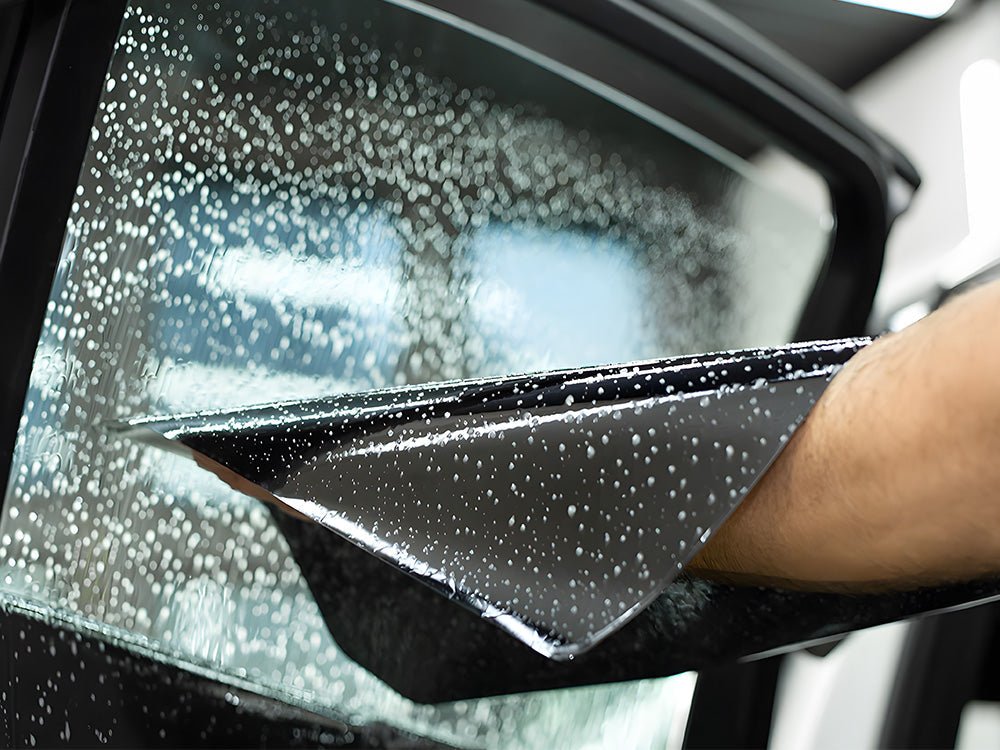
PPF is a transparent polyurethane film. It physically shields the car paint from the external environment, preventing corrosion and oxidation from acid rain, bird dropping, tree sap, and UV ray. It also protects against physical damage like flying stones and scratches from branches while driving. PPF is often called the car’s “invisible armor.”

Benefits of Choosing PPF
- Resists physical scratche: PPF has high toughness and wear resistance, effectively protecting paint from flying stones, branch scratches while driving, and door dings in parking.
- Prevents chemical corrosion: PPF fully isolate the car paint from the external environment.PPF resists acid rain, bird droppings, tree sap, and insect residue.
- UV protection: TPU PPF blocks ultraviolet ray, preventing paint from fading and aging due to long term sun exposure.
- Self healing: minor swirl marks and scratches from daily washing or light bumps can be automatically repaired by PPF when exposed to heat, such as sunlight or hot water.
- Increase vehicle value: the condition of the original paint is an important factor in used car evaluation. A car with intact factory paint is valued higher than one with repainting, especially for luxury vehicles, where this value retention is more significant.
- Hydrophobic and easy to clean: the PPF surface usually has a hydrophobic coating, making rain and dirt less likely to stick and car washing easier.
Drawbacks of Choosing PPF
- High risk of low quality PPF: poor quality PPF can yellow, leave glue residue, crack, or bubble.affects the car’s appearance and can damage the paint.
- High installation skill requirement: PPF installation is a very precise task, demanding strict control of the environment and high technician skill. Improper installation can cause bubbles, lifting edge, or poor adhesion, seriously affecting appearance and protection.
- Not an all purpose armor: PPF cannot protect against severe collisions, and the car may still require bodywork and repainting.

What is Ceramic Coating
Ceramic coating is a liquid made from nano ceramic particles mixed with special resin. It form a thin, hard, transparent layer on paint through chemical bonding and physical coverage. Its main function is to boost paint’s chemical and physical protection, offering scratch resistance, corrosion protection, and water repellent self cleaning, but it usually doesn’t change car color.

Benefits of Choosing Ceramic Coating
- High hardness: once cured, ceramic coating reaches a very high hardness, usually 6H–9H. It effectively resists minor scratches from daily washing, branches, and similar sources.
- Corrosion and chemical resistance: ceramic coating is chemically stable and effectively resists corrosion from acid rain, bird droppings, tree sap, insect residue.
- Excellent hydrophobicity: The most obvious feature of ceramic coating. The coating has very low surface tension, creating a “lotus effect” that makes water beads slide off quickly, carrying away dust and dirt from the paint surface.
- High temperature resistance: ceramic coating can withstand extremely high temperatures (usually above 800°C), adapting well to hot environments and effectively protecting the paint from heat damage.

Drawbacks of Choosing Ceramic Coating
- Not scratch proof: ceramic coating can resist minor scratches but offers no protection against deep scrapes or stone impacts.
- Hydrophobic effect fades: The hydrophobic performance gradually weakens over time and requires regular maintenance.
- Perfect base required: The coating magnifies existing paint defects (such as swirl marks and oxidation). Polishing is a must before application, and older vehicles may need extra paint correction costs.
- Not suitable for all materials: Some plastic and rubber part may discolor or have poor adhesion after ceramic coating.
- Low temperatures affect curing: In cold regions or during winter, ceramic coating may not cure completely, which affect durability.
- Potential impact on car paint: The polishing step before application remove a layer of car paint. It can remove scratches, but over time it will thin the original paint.
- Difficult to repair: If the ceramic coating is badly damaged,can not be repaired locally. The damaged area usually needs to be polished off and recoated, which is a complex and costly process.

Ceramic Coating vs PPF
| Feature |
PPF |
Ceramic Coating |
| Protection principle |
protect against external damage through physical isolation |
Forms a hard, transparent inorganic crystal layer through a chemical reaction,not react with external substances |
| Thickness |
165μm-254μm |
0.5μm-3μm |
| Color |
Transparent gloss,matte and color can choose |
Transparent |
| Protection duration |
5–10 years |
Requires maintenance or reapplication every 1–3 years |
| Scratch repair |
Self healing: TPU PPF can automatically repair minor surface scratches when exposed to heat, such as sunlight or hot water |
No self healing: scratches or wear require manual repair or reinstallation |
| Application time |
1-3 days |
Half a day to one day |
| Cost |
High: both material and installation costs are relatively expensive |
Medium: priced between wax and PPF |
| Effect on paint |
No damage: does not harm the original paint when removed |
Can cause damage: polishing before application removes a layer of clear coat, and repeated long term applications may thin the paint |
Ceramic Coating vs PPF service coverage
Ceramic Coating vs PPF Basic/Standard Level Service
|
Service Level |
PPF |
Ceramic Coating |
|
Basic Level |
Front bumper full coverage (including lower guard and area around air intake grille) |
Exterior paint surface of four doors |
|
Front edge of hood (about front 1/3 to 1/2) |
Front and rear bumper surfaces |
|
|
Outer side of front fender (local scratch-resistant area) |
Roof (some shops may not include or apply only a thin layer in basic package) |
|
|
Side mirror surface (optional, included in some shops) |
Top surface of hood and main paint surface of rear end |
|
|
Standard / Plus |
Front bumper, front fender, and side mirror full coverage |
Entire car paint surface (four doors, front and rear bumpers, roof, rear end, fenders) |
|
Front half of hood or entire hood (depending on model) |
Side mirrors, door handles, A-pillar, and in some shops, wheel arches and top edge of window frames |
|
|
Door edge scratch guards (included in some shops) |
May extend to plastic trim, front and rear lamp covers, or minor metal trim (included in some shops) |
|
|
Optional: A-pillar, roof edge (local protection) |

Ceramic Coating vs PPF Premium/Elite service coverage
|
Service Level |
PPF |
Ceramic Coating |
|
Premium / Pro |
Front bumper, hood, front fender, side mirror, A-pillar, C-pillar, door edge, and scratch guard full coverage full coverage |
Entire car paint surface (four doors, front and rear bumpers, roof, rear end, fenders)full coverage |
|
Partial roof coverage |
Side mirror, door handle, A-pillar, C-pillar full coverage |
|
|
Outer side of front and rear door (partial or full coverage, depending on model and shop) |
Wheel arches, plastic trim, lamp cover (front and rear lights) |
|
|
Partial protection of rear end (rear bumper and areas prone to collision or scratches) |
Inner side of front and rear bumper (included in some shops) |
|
|
Elite / Ultimate / Multi-Layer |
On top of the “full coverage” in Premium/Pro service, full coverage of front and rear doors, front and rear fenders, roof, and rear end is added. |
On top of the “full coverage” in Premium/Pro service, full coverage of inner sides of front and rear bumpers, door gaps, and paint areas prone to dirt is added. |
|
Wheel arches and optional underbody paint protection (offered in some high-end shops) | ||
|
Lamp covers and some plastic trim (included in some shops) |
Optional: inner surface of front hood and trunk (offered in some high-end shops) |

Ceramic Coating vs PPF Service Price
PPF Service Price
|
Vehicle model |
Basic Level |
Standard / Plus |
Premium / Pro |
Elite / Ultimate / Multi-Layer |
|
Sedan |
$600-$1,200 |
$1,500-$3,000 |
$3,000-$5,500 |
$5,500-$7,000+ |
|
SUV/MPV |
$1,000-$1,200 |
$1,900-$3,500 |
$2,500-$5,000 |
$5,000-$8,000+ |
|
Pickup |
$1,200-$1,500 |
$2,500-$4,000 |
$3,500- $6,500 |
$6,500-$10,000+ |
|
Coupe |
$1,000-$1,500 |
$2,000-$3,500 |
$3,000-$5,500 |
$5,500-$8,000+ |
|
Sports Car |
$1,200-$2,000 |
$2,000-$3,500 |
$3,500-$5,500 |
$5,500-$8,000+ |
|
Crossover / Compact SUV |
$1,200-$1,800 |
$2,200–$3,800 |
$3,200-$5,500 |
$5,500–$8,500+ |
Ceramic Coating Service Price
|
Vehicle model |
Basic Level |
Standard / Plus |
Premium / Pro |
Elite / Ultimate / Multi-Layer |
|
Sedan |
$500-$800 |
$800-$1,200 |
$1,200-$1,800 |
$1,800-$2,500+ |
|
SUV/MPV |
$800-$1,200 |
$1,200-$1,800 |
$1,800-$2,500 |
$2,500+ |
|
Pickup |
$1,200-$1,600 |
$1,600-$2,200 |
$2,200-$3,000 |
$3,000+ |
|
Coupe |
$600-$1,000 |
$1,000-$1,500 |
$1,500-$2,500 |
$2,500+ |
|
Sports Car |
$900-$1,400 |
$1,400-$2,200 |
$2,200-$3,500+ |
$3,500-$6,000+ |
|
Crossover / Compact SUV |
$1,200–$1,500 |
$1,500–$2,000 |
$2,000–$2,800+ |
$2,800+ |
Situations suitable for PPF installation
- The vehicle is new, high end, sports, or a collectible/limited edition model.
- Frequently drives on highways or mountain roads.
- Parking environment is complex, coastal, or in areas with strong UV exposure.
- Areas with heavy snow and road salt in winter.
- Want to keep a “like new” look for a long time and maintain vehicle resale value.
- Want easier cleaning without frequent waxing or polishing

Situations suitable for choosing Ceramic Coating
- The vehicle is used often but not frequently driven on highways.
- Want to keep the paint glossy for a long time and enhance water, dirt, and acid rain resistance.
- Hope to make washing easier with less dust and mud sticking to the surface.
- Have a limited budget but still want better appearance and protection.
- Don’t mind regular maintenance (such as yearly coating refresh).

Conclusion
PPF focuses on physical protection and is best for preventing scratche, stone chip, and minor collision. Ceramic coating focuses on chemical protection and is best for enhancing gloss and preventing water spots, dirt, and minor chemical stain. The choice depend on the owner’s budget, driving environment, and desired level of protection.
What is the difference between PPF and ceramic coating?
PPF is a transparent, protective film applied to your car’s surface to prevent scratches, chips, and dents. Ceramic coating is a liquid polymer that chemically bonds to the paint, providing hydrophobic properties, UV protection, and easier cleaning.
How long does PPF last compared to ceramic coating?
PPF typically lasts 5–10 years depending on quality and maintenance. Ceramic coating lasts 2–5 years, depending on product strength and environmental conditions.
Will ceramic coating prevent scratches like PPF?
Ceramic coating offers minor scratch resistance but does not prevent chips or deep scratches. PPF is much more effective at physical damage protection.

Carlikewrap
Carlikewrap have over 20 years of experience in the Adhesive Vinyl Films industry. For the past 20 years, we have been providing our customers with quality products and services that exceed expectations.